

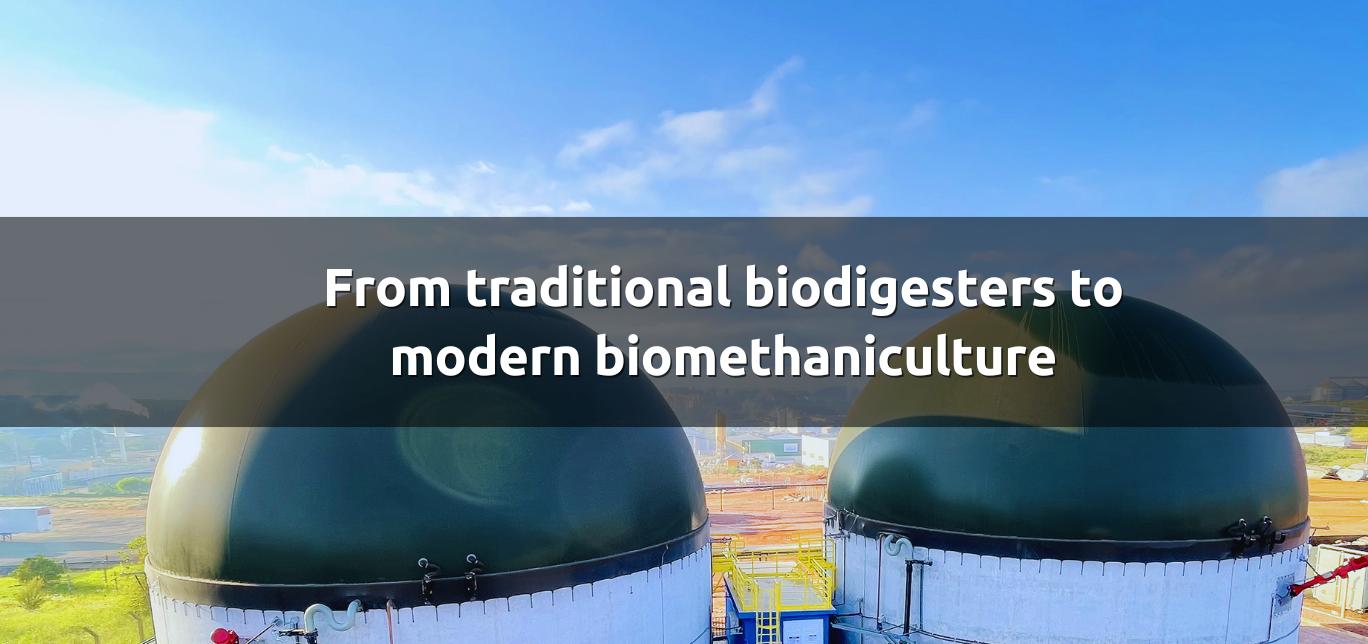
From the traditional biodigester to modern biomethanoculture (biomethane farming)
The 4.0 Revolution of Brazilian Biorefineries
By Editorial Team, Portal Energia e Biogás
Brazil, which transformed sugarcane into a global energy powerhouse with ethanol, today faces an even vaster and more strategic opportunity. It is not just about producing a new biofuel, but about mastering a complete value cycle. The future is not in conventional biogas plants, focused solely on burning for thermal or electric energy generation. The horizon unfolding is that of 4.0 Anaerobic Process Biorefineries, intelligent industrial ecosystems that, under the concept of Biomethanoculture (Biomethane Farming), convert organic waste into a diverse portfolio of high-value products and services.
This evolution represents a paradigm shift: we move from the linear logic of "waste to raw gas" and enter the circular economy of "waste to value generation". In a 4.0 biorefinery, every molecule is valued. Biogas is purified into high-purity biomethane (CH4), a renewable fuel that can inject competitiveness into heavy transport and industry throughout the national territory. Carbon dioxide (CO₂), once a simple byproduct, is captured and valued for use in different industries, the beverage production sector, agricultural greenhouses, or even as a feedstock in many other chemical processes. The digestate, far from being a liability, is processed into stable and enriched biofertilizers, closing the nutrient cycle in the soil. Even surplus water and heat from the process are recovered and reintegrated. This holistic view multiplies revenue sources, transforming the sector's economic viability.
However, to manage this complexity with efficiency and profitability, operational simplification is imperative. And this is where the concept of Industry 4.0 becomes the great ally. The desired simplification comes not from a lack of technology, but from its intelligent application to make better and faster decisions. State-of-the-art on-line sensors and biosensors, capable of monitoring diverse parameters, from volatile acids to real-time biogas composition, feed Artificial Intelligence and machine learning algorithms. These systems create a "digital twin" of the biological process, allowing for the prediction of deviations, load optimization, and prescription of automatic adjustments. The microscopic complexity, where billions of microorganisms execute the transformation, will be governed by simplified macroscopic control, reducing direct human intervention, operational costs, and the risks of biological collapse.
Advancing on this path requires a conscious risk mitigation strategy, which must be the foundation of any modern project. The first risk to avoid is the technological leap without foundation. The safest route involves gradual integration and validation at scale. Bench tests and pilot projects with real waste are not only recommended but mandatory to understand the specific biology responsible for the degradation of each substrate. Likewise, data reliability is crucial; investing in quality instrumentation and the training of "biomethane farmers" (professionals from different areas of agricultural production, agro-industry, engineering, processes, data analysis, among others who dedicate themselves to the challenge of operating and supporting the management of anaerobic systems for economic purposes), who unite knowledge about anaerobic biological behavior, is insurance against expensive operational failures. Finally, market risk is mitigated by the biorefinery's own business model: a diversified product portfolio (biomethane, biogenic CO2, green H2, green ammonia (NH3), fertilizers, environmental asset certificates, etc.) protects the enterprise from the volatility of a single market.
Brazil brings together all the elements to lead this revolution: a critical mass of knowledge in microbiology, biotechnology, and process engineering; a gigantic and still underutilized matrix of agro-industrial and urban waste; and a maturing regulatory framework. We have the expertise that proved it possible to master a complex bioenergy chain. Now, it is time to apply this know-how to raise biogas to a new level of sophistication and global competitiveness.
The future is not a distant bet; it is a construction that begins today, with rigorous planning, careful technological adoption, and a clear vision that value lies in the totality of the process. The era of Biomethanoculture (Biomethane Farming) 4.0 is not a futuristic dream, it is the next natural chapter of the Brazilian bioeconomy. It is about giving time to time, but with the right acceleration of science, innovation, and strategic vision. The potential is at our doorstep, transforming what is discarded into the foundation of a new, clean, circular, and prosperous economy.
Liked the topic?
Want to know more about biogas in Brazil?
Copyright © 2018 - 2026 All rights reserved - Portal Energia e Biogás®.
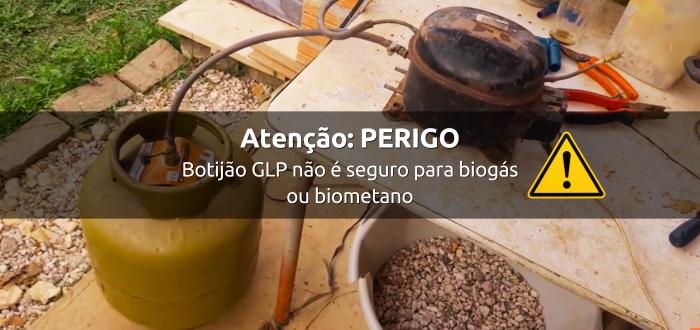 Perigo: botijão GLP não é seguro para biogás ou biometano
 Habilidades em alta no setor de biogás
 No setor de resíduos, a agenda climática já saiu do papel
 A importância dos aterros sanitários
 ABREN na inauguração da 1ª usina de biometano de dejetos suínos
 Biogás e Biometano no Brasil
 Prêmio Melhores do Biogás 2026
 Necta define 30 de março como prazo para propostas de interconexão de biometano